Nature Pairs — an educator's view
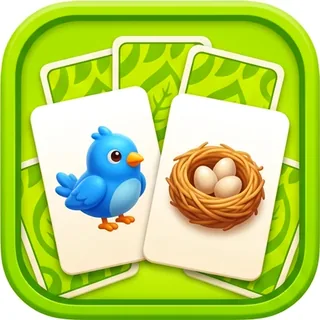
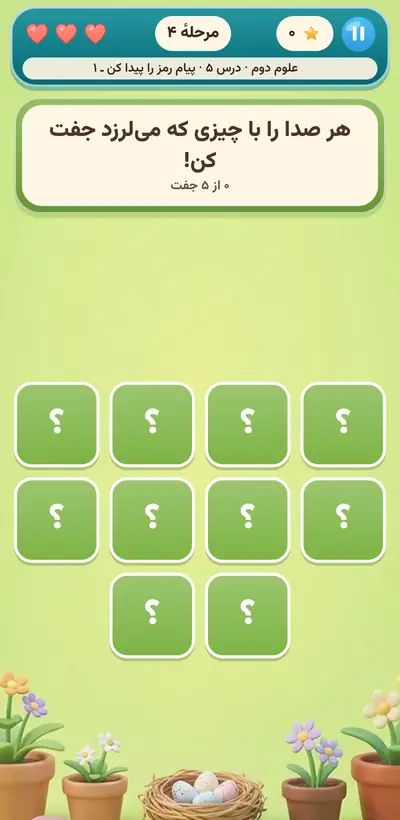
Nature Pairs is a face-down memory game, but the two cards in each pair aren't identical: one is an animal, the other its home; one is a sense, the other its organ; one is a material, the other the state it changes into. The child flips two cards and has to both remember where the cards were and recognize the relationship between them. Topics range from baby animals and plant parts in grade 1 to ways heat travels, electrical circuits, blood circulation and Iran's forests in higher grades.
Memory for place and position
The child has to remember where the card "nest" was flipped a moment ago. Holding several cards' locations in mind exercises visual-spatial memory — the same ability used to recall where a word sits on a page or the route from home to school.
Finding the relationship between two things
Matching "chick" with "hen", or "tongue" with "taste", means seeing the connection between two different things. This kind of thinking, called relational thinking, helps knowledge stop sitting in the mind as separate pieces and become a connected network instead.
Staying on task
A memory game doesn't go well with distraction; if the child misses seeing which cards were flipped, they lose the chance to find the match. This simple rule alone encourages sustained attention and tracking every move, without anyone needing to keep saying "pay attention".
The pleasure of persistence
A card that wasn't a match flips back, and the child has only added one new fact to their memory; every unsuccessful try makes the next one easier. The child sees firsthand that persistence pays off, and the moment of finding the last pair brings a small joy of discovery.
A tip for parentsMake eight small cards with paper and colored pencils: four animals and their four homes, like a bee and a hive, or a bird and a nest. Lay the cards face down and take turns playing; whenever a pair is found, say a short sentence about it.
 Nikipoo School


 Grade 172 levels
 Grade 260 levels
 Grade 368 levels
 Grade 468 levels
 Grade 560 levels
 Grade 664 levels