Daily 10: Science — an educator's view
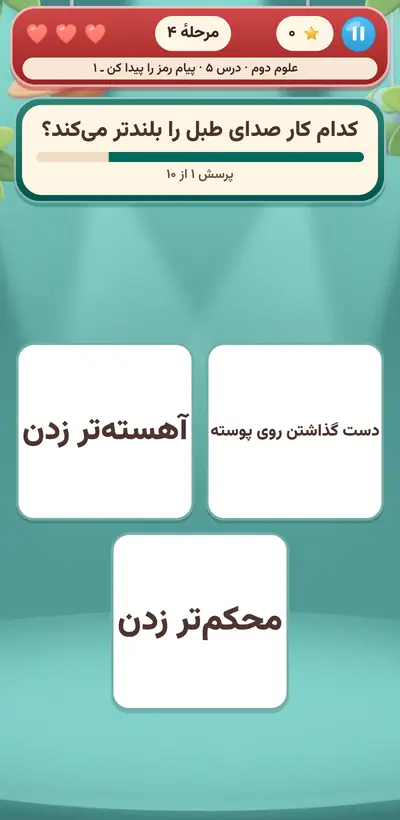
Daily 10: Science is built for review, not for teaching new material. Every day, ten science questions are freshly drawn from the child's grade bank and come one after another, alongside a bar that shows time passing. The questions span living and non-living things and the five senses in grade 1, up to states of matter, electric circuits, heat transfer, the digestive system, cells and the solar system in higher grades. The goal is to keep knowledge alive so the child recalls it more fluently.
Pulling it back out of memory
Material read once fades without review. Because the questions are redrawn every day from across the whole grade's lessons, the child also has to recall material from weeks earlier. Learning researchers call this "retrieval practice" and consider it a strong way to make knowledge stick.
Fluency in recall
The time bar encourages the child to put their knowledge to use without hesitation. When simple facts come to mind quickly, the child's thinking stays freer for the more complex questions in class — much like fluent reading frees a child from sounding out every letter.
Staying calm under gentle pressure
Running out of time in this game doesn't count as failure; the game just shows the right answer and brings the next question. The child experiences, in a low-risk setting, that it's possible to stay calm and keep thinking even as time passes — a small rehearsal for test days.
A few-minutes habit
Ten questions take only a few minutes, and each day is a little different from the last. This brevity and freshness help review become part of the daily routine without feeling tiring; the child sees that learning is a daily task, not just something for the night before a test.
A tip for parentsAfter the day's challenge, pick one question the child wasn't sure about and look up the answer together in the science textbook. If you can, watch a real example at home too — for states of water, watch a piece of ice melt.
 Nikipoo School



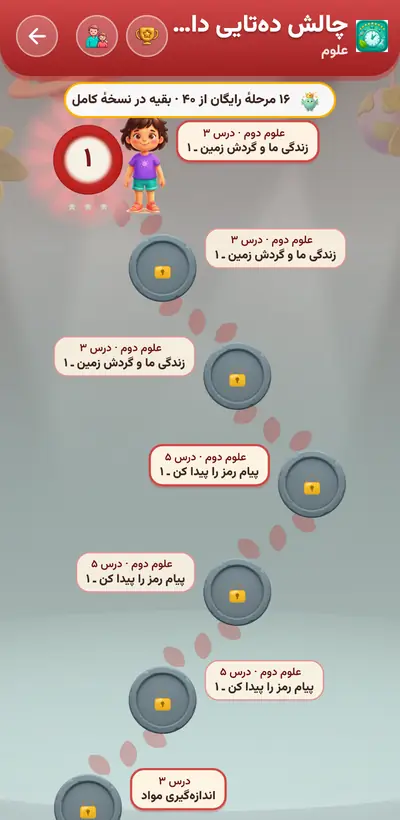
 Grade 140 levels
 Grade 240 levels
 Grade 340 levels
 Grade 440 levels
 Grade 540 levels
 Grade 640 levels