Question Lab — an educator's view
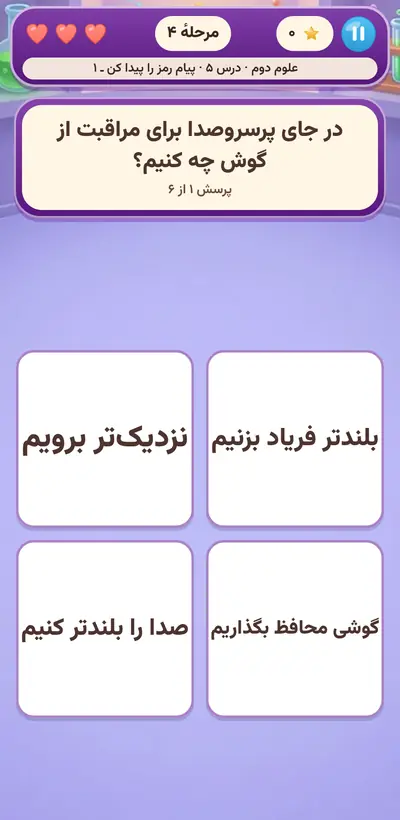
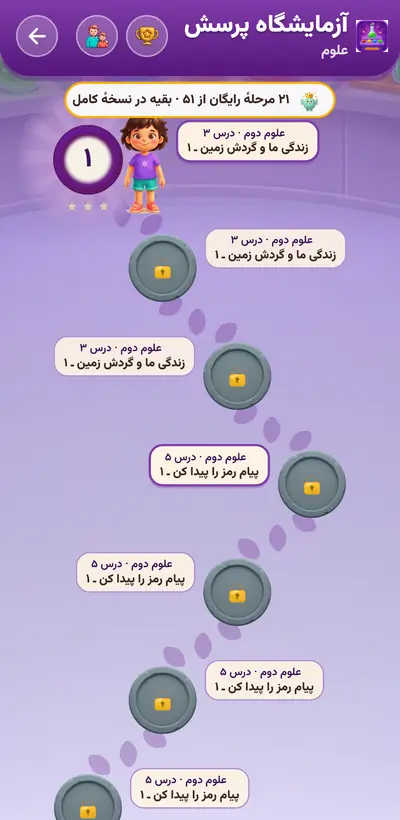
Question Lab brings four-choice science questions in step with each grade's textbook lessons: from the needs of living things and seed sprouting in grade 1 and 2, to gravity and fossils in grade 4, photosynthesis and the nervous system in grade 5, and cells, Earth's layers, pressure and buoyancy in grade 6. The game is in no hurry and keeps no time; the child reads the choices, rules some out, and picks with plenty of room to think. "Gentle review" levels between lessons also offer a breather.
Reasoning by elimination
In a four-choice question, the child learns that if they're not sure of the answer, they can first set aside the choices that are clearly wrong. This process of elimination is itself a form of reasoning, and shows them that even partial knowledge can carry them step by step toward the answer.
Equal time to think
Since there's no clock running, a child who thinks more slowly gets the same chance as a quicker one. This setting helps anxious children read the question carefully, think it through, and trust their own choice, instead of guessing in a hurry.
No question left unanswered
A wrong choice simply switches off, leaving room to choose again; after a second mistake, the game itself lights up the correct choice. So the child always moves to the next question already knowing the right answer, not with a vague feeling of failure — and that answer stays with them.
Getting familiar with scientific language
The questions use words like conductor, vertebrate, evaporation, friction and cell in short sentences. Understanding these words in the context of a question helps the language of the science textbook become familiar, and gives the child more confidence using them in class too.
A tip for parentsSwitch roles at the dinner table: have the child ask one of the game's questions with four choices for the rest of the family, then explain why that answer is correct. Coming up with believable wrong choices takes a deeper understanding than just answering.
 Nikipoo School


 Grade 154 levels
 Grade 254 levels
 Grade 351 levels
 Grade 444 levels
 Grade 557 levels
 Grade 651 levels