Niki's Lab — an educator's view
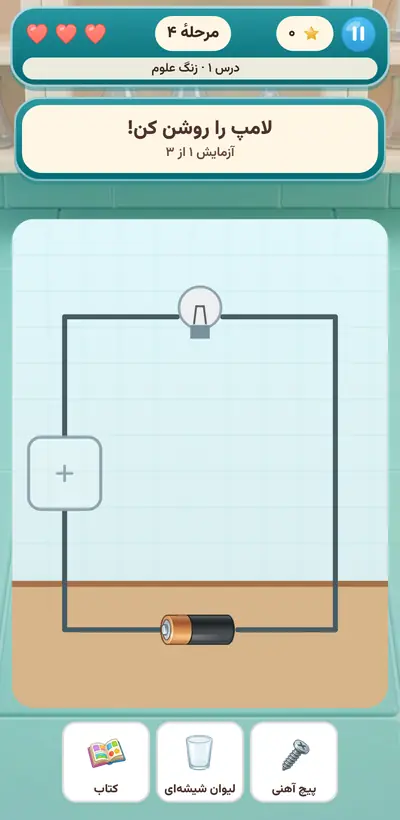
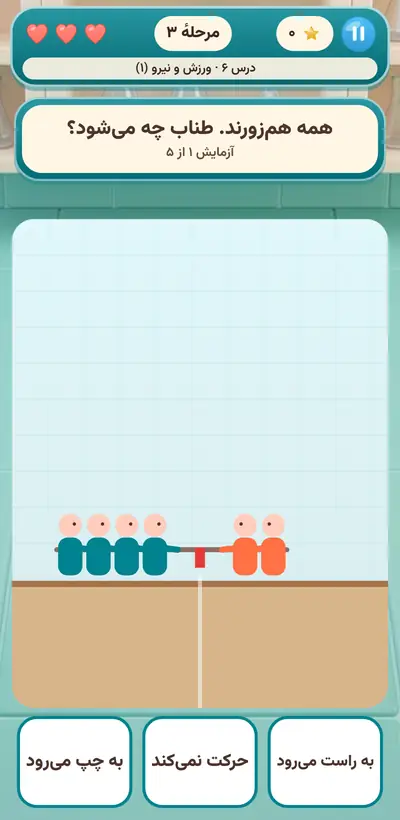
The Lab is for grades 3 through 6 and brings the science textbook's “think, experiment, observe” cycle to a tabletop experiment. The child predicts first — will the magnet pull this spoon? will this bulb light up? — then the experiment runs before their eyes and they see the result. Sometimes they place the battery, wire, and bulb together themselves and build a circuit. The topics are magnets and poles, dissolving and separating mixtures, series and parallel circuits, electromagnets, friction, levers, and seesaws.
Guessing and testing
Predicting before the experiment is exactly a “hypothesis”: a guess that can be tested. The child learns to think first, pick their guess, and then compare it against the evidence. This mental habit is the core of scientific thinking, and in other subjects too it keeps the child from accepting a claim without reason.
A wrong guess, a path to discovery
When a prediction doesn't come true, the game just says “the experiment showed something else!” and shows that same truth. The child experiences that scientists guess wrong too, and that those very guesses lead them to discovery; an outlook that lessens the fear of being wrong.
From “what” to “why”
Building a circuit with their own hands, seeing both bulbs go dark in a series circuit, or moving a lever's fulcrum takes the child from “what happens” to “why it happens.” They discover how the parts of a system relate to each other, a foundation for understanding the devices they deal with at home every day.
A fair comparison
In levels like “smooth surface, rough surface” or “more turns of wire,” one factor changes and its effect is seen. Without knowing its name, the child becomes familiar with the idea of a “variable”: to see the effect of one thing, you change only that and keep the rest the same.
A tip for parentsGather a fridge magnet and a few small things like a paperclip, a coin, a spoon, and a bottle cap. Before each test, ask the child “do you think it'll stick?” and write down their guess; then test it together and mark the result next to the guess.
 Nikipoo School

 Grade 340 levels
 Grade 456 levels
 Grade 552 levels
 Grade 656 levels