Speed Reader — an educator's view
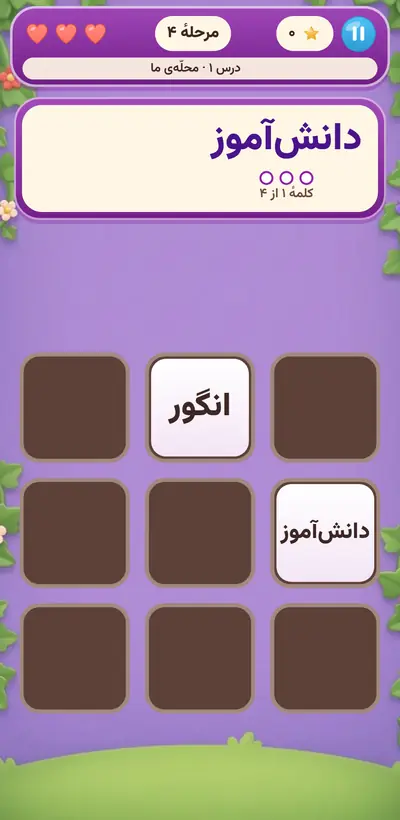
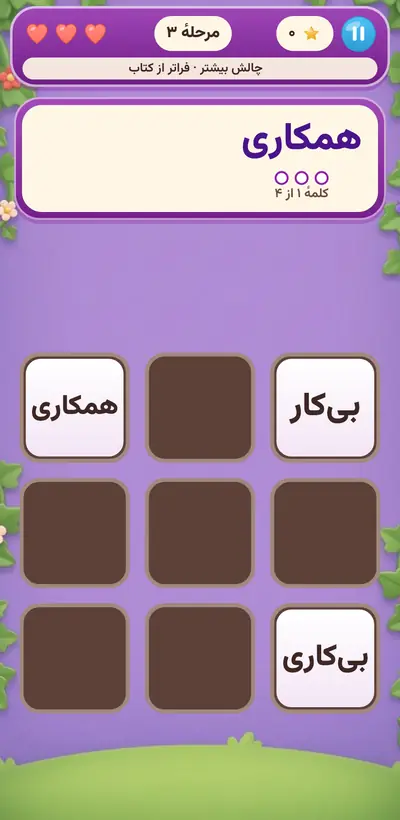
A child who sounds out every word letter by letter has forgotten the start of the sentence by the time they reach the end. Speed Reader's goal is for the child to recognize high-frequency words whole, without sounding them out. The target word is shown at the top of the screen, and word cards pop out of nine windows for a moment; the child only taps the card matching that word. The distractors are deliberately similar: «این» and «آن» (“this” and “that”), «میرود» and «میروند» (“goes” and “go”), «سفر» and «صفر» (“trip” and “zero”), «خواست» and «خاست» (“wanted” and “rose”), and in higher grades, «گزار» and «گذار».
Automatic, fluent reading
When a word is recognized at a glance, over and over, the brain stops spending energy decoding it. This automaticity, the foundation of reading fluency, frees up mental capacity for understanding meaning; that's why a fluent reader usually also understands the text better.
Attention to the detail in lookalike words
«میرود» and «نمیرود» (“goes” and “doesn't go”) differ by only one prefix, yet their meanings are opposite. Speed Reader makes the child read fast while paying attention to that small part; a combination that prevents guessing and careless reading.
A mental image of tricky spelling
In grades 3 through 6, words with the doubling mark, tanvin, hamzeh, and the «خوا» cluster appear before the child's eyes again and again. Repeatedly seeing the correct form next to lookalikes helps the spelling of words like «حتماً» or «تأخیر» settle into visual memory.
A card that comes back around
If the target word is missed, there's no penalty, and it comes out of a window again. A wrong tap just turns the card a gentle orange, and the game reminds the child which word to look for. The child learns that being fast and being calm can go together.
A tip for parentsWrite five words from one of the levels on small cards. Show each card for one second and ask what it said. Shorten the time slightly with each round, and at the end, find those same words together in the child's textbook.
 Nikipoo School



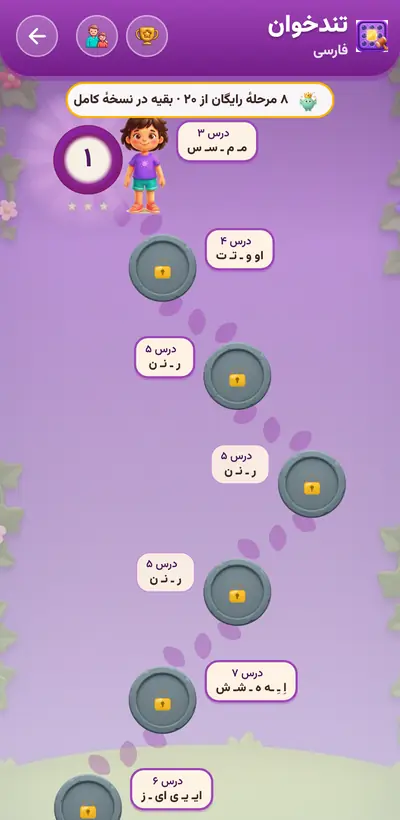
 Grade 120 levels
 Grade 220 levels
 Grade 324 levels
 Grade 424 levels
 Grade 522 levels
 Grade 623 levels