Daily 10: Words — an educator's view
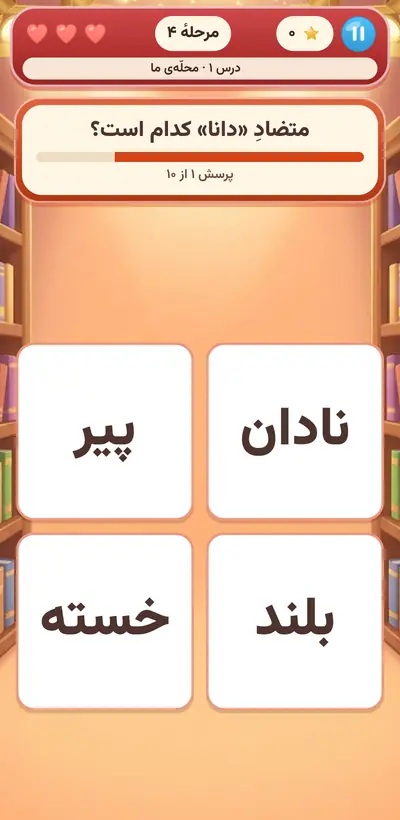
Part of learning Persian is cemented through short, regular review, not long drills. Daily 10: Words draws ten fresh multiple-choice questions from the grade's bank every day, with a gentle time bar. Questions start with letters and word parts in grade 1, move on to missing letters, the tashdid mark, nunation and homophones like «خوار و خار» in grade 2 and 3, and review broken plurals, pronouns, idioms and proverbs in higher grades.
Active recall
Pulling an answer out of memory cements it more than rereading a lesson does; psychologists call this the "testing effect". Ten daily questions push the child to genuinely recall what they know about opposites, plurals and tricky spellings.
Spaced, mixed review
Because the questions are redrawn from the grade bank every day, a concept comes back spaced out and mixed in among others. This mixing helps the child recognize the concept itself, rather than memorizing question order, and apply it in a new situation.
Speed with calm
The time bar helps knowledge become quickly available in the mind. If time runs out, the game simply shows the right answer and moves to the next question. The child experiences that a little time pressure is bearable, and losing one question doesn't matter.
A small daily habit
Ten questions take just a few minutes, and each day's challenge is a little different. This shortness makes it easy for the child to get started, and gradually builds a daily review habit — one that works better than one long, tiring session the night before a test.
A tip for parentsPick a fixed time for the daily challenge, say right after afternoon snack. After the ten questions, ask the child to explain today's hardest question to you, or make a sentence with its word; explaining to someone else deepens learning.
 Nikipoo School



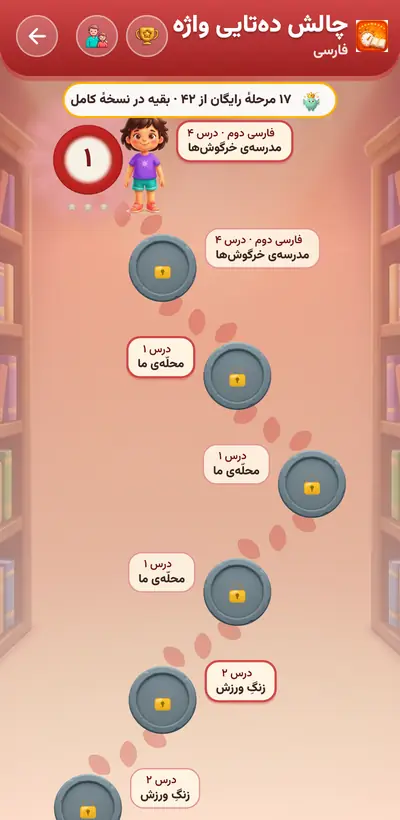
 Grade 143 levels
 Grade 242 levels
 Grade 342 levels
 Grade 442 levels
 Grade 542 levels
 Grade 642 levels