Sharp Eyes — an educator's view
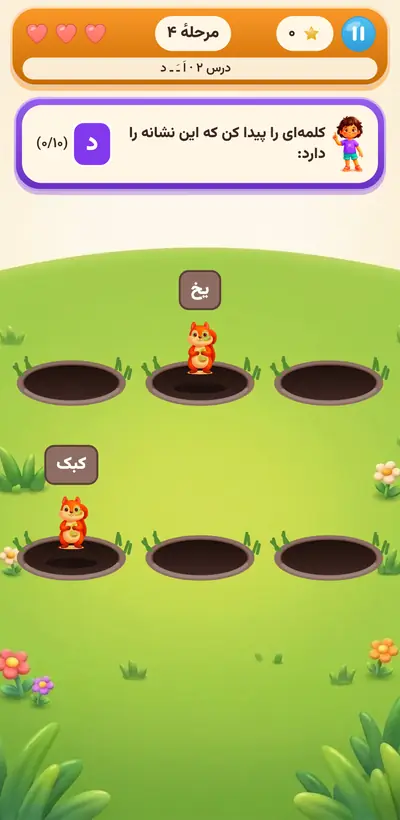
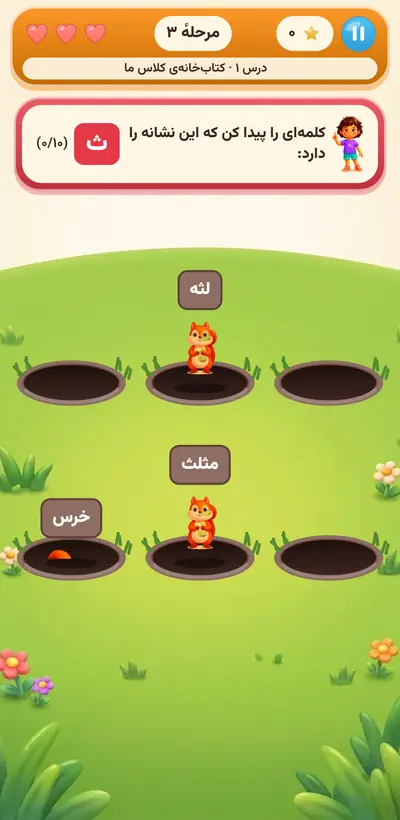
In first grade, the most important step after introducing a letter is helping the child recognize it inside real words, not just alone on a chalkboard. Sharp Eyes does exactly that: today's letter sits at the top of the screen while word signs pop out of burrows one by one. The child has to decide at a glance whether this word has the letter «م» or «ت». In grade 2 that same close look turns to tricky look-alikes and sound-alikes: «ص» or «س», «ط» or «ت», and the four shapes of «ز».
An eye that catches the dots
Persian letters sometimes differ by a single dot. When a child has to tell «ت» apart from «ب», «پ» and «ث», their visual perception practices paying attention to the number and position of dots — the same precision that later stops letters from being misread.
One letter, several faces
Levels like "the letter in the middle and end of a word" show the child that one sound changes shape at the start, middle and end of a word. This "shape constancy" settles in their mind: they realize the different forms of a letter are one and the same, not separate things.
Selective attention and impulse control
Not every sign is meant to be tapped. The child has to hold back a hand eager to tap right away and pick out only the word that carries the target letter. This short pause of "look first, then tap" is good practice for self-control and focus among distractions.
The joy of spotting the letter
If the child taps the wrong sign, the game invites another look with an encouraging line, and fresh words rise back up. This steady flow gives a child who has just started reading the feeling of "I can find it."
A tip for parentsWrite today's game letter on paper and go hunting for it together on food packaging, street signs or storybooks. Each time the child spots it, ask them to say whether the letter comes at the start, middle or end of the word.
 Nikipoo School
 Grade 194 levels
 Grade 228 levels