Word Factory — an educator's view
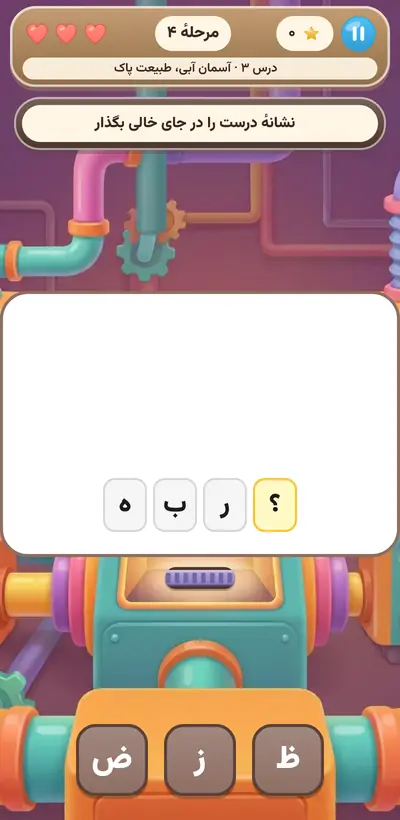
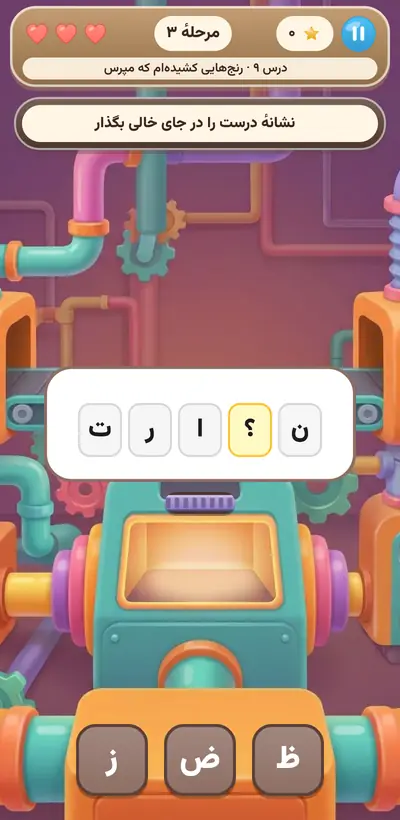
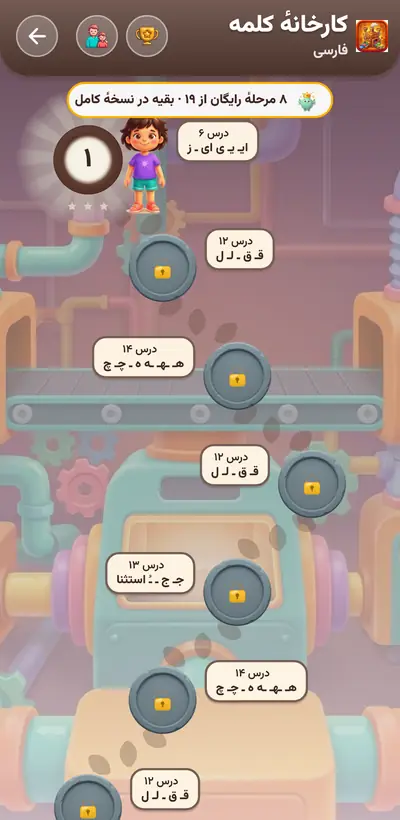
Spelling in primary school isn't just memorizing how a word looks; the child has to know which letter belongs in which spot in the word. In Word Factory, a word with a blank spot and its picture rides in on a conveyor belt, and the child picks the correct letter from among three look-alikes. It starts with «ش» and «چ vs ج» in grade 1, reaches «خوا» and word families in grade 3, and continues through grade 4 to 6 with the hamza, homophones like «صد یا سد», and suffixes like «ـمند، ـگر، ـستان».
A spelling memory for the word
When the child repeatedly places the right letter in the blank and sees and hears the complete word from the narrator, a precise picture of that word settles in their mind. This picture is called an "orthographic map" — exactly what a child leans on when writing a dictation.
Spelling with meaning
In word-family and homophone levels, a short meaning hint appears beside the word. The child learns to think about a word's meaning and root to choose between «ص» or «س» — tying spelling to the logic of language, not to chance.
Awareness of word structure
Levels like «ـه ← ـگان», «plural with ات» and «prefix and suffix: بی، با، ـزار» show the child that words are built from meaningful pieces. This structural awareness helps them read and write unfamiliar words too, by breaking them into their parts.
A button that flashes red for a moment
If the wrong letter is chosen, the button briefly changes color and the word waits right there for the child to think again. The word isn't marked wrong, and the child completes it themselves; this feeling of "I fixed it myself" builds a sense of capability.
A tip for parentsAfter playing, write three words from today's level on paper with one letter missing and let the child fill in the blank. Then together find another word from the same family — for example, going from «علم» to «معلم» and «عالم».
 Nikipoo School


 Grade 119 levels
 Grade 220 levels
 Grade 326 levels
 Grade 425 levels
 Grade 525 levels
 Grade 624 levels