Sound Balloons — an educator's view
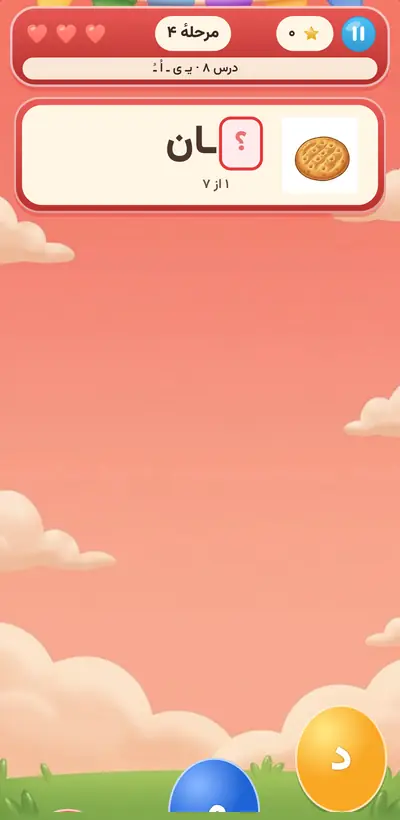
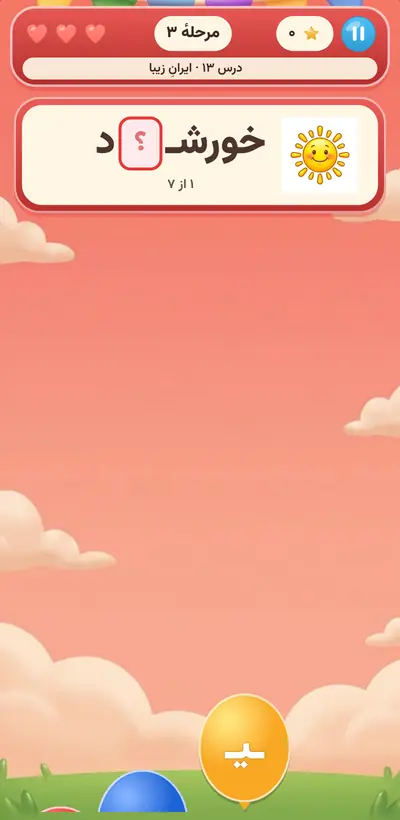
Before a child can read, they need to hear the sounds inside a word and tell them apart — that's phonological awareness, and it's exactly what Sound Balloons builds. A picture and a word with one blank sit at the top, and balloons carrying different letters rise slowly. The child has to work out the first, last or middle sound of the word and pop the balloon with that letter. In grade 2, the four shapes of a letter, like «بـ ـبـ ـب ب», and sound-alikes like «ق or غ» are added.
Hearing the sounds hidden in a word
Finding the "first sound" and "last sound" of a pictured word is exactly the exercise the grade-1 Persian workbook asks for. This practice helps the child see a word as a chain of sounds — the foundation that reading and writing new words is built on.
Linking sound to letter
The child connects a sound heard in their mind to the letter written on the balloon. Repeating this link, known as the alphabetic principle, helps letter recognition move beyond memorizing shapes and become meaningful.
Gentle motion, a calm mind
The balloons rise with a gentle sway and don't start moving until the narrator finishes the instruction. If the right balloon drifts past the top, a fresh wave arrives. This unhurried rhythm gives a young child room to think without rushing and to hold their focus.
Help that arrives right on time
Instead of "wrong", the game says "almost! look again", and if the child misses twice, the correct balloon gets a golden frame. This way the child never gets stuck, and learns that getting help is a normal part of learning.
A tip for parentsKeep playing "first sound" at home: point at an object and ask what its first sound is, then let the child ask you. For grade 2, write down a letter and find all four of its shapes in words together.
 Nikipoo School

 Grade 120 levels
 Grade 220 levels