Squeaky Clean — an educator's view
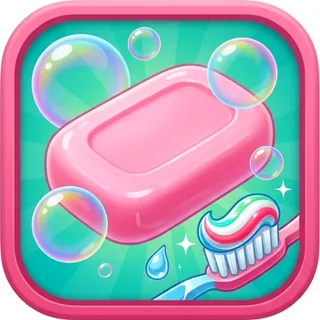
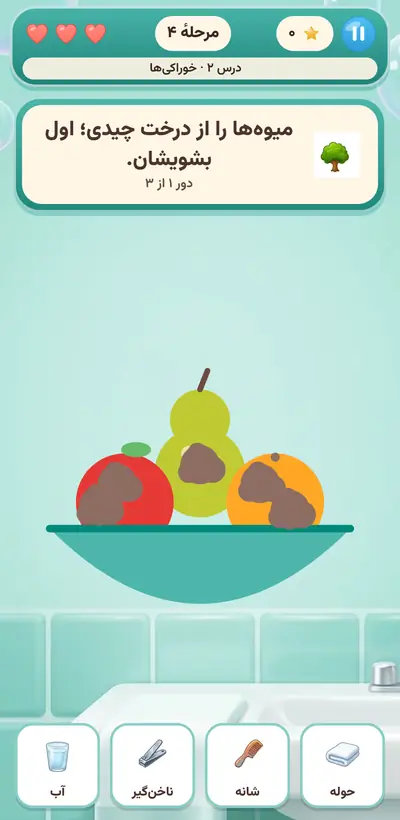
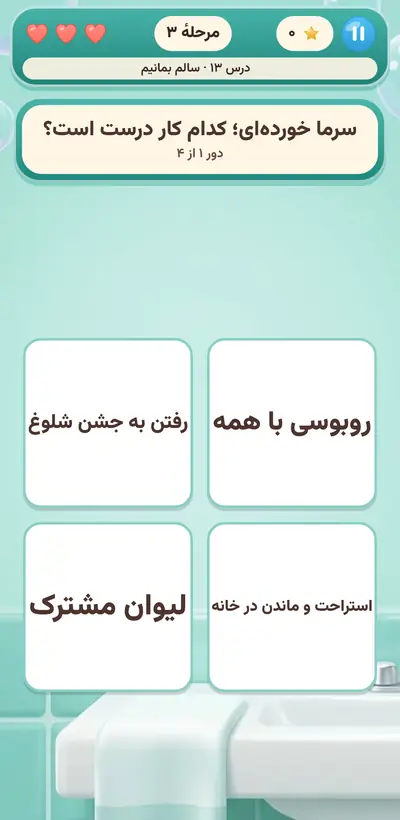
Hygiene can't be taught just by telling; the child has to do the task with their own hands. In Squeaky Clean, a situation card like “let's wash our hands before eating!” appears, the child picks the right tool from soap, toothbrush, and comb, and rubs away stains and germs with a finger until they're gone. Later grades add handwashing steps, sneezing into the elbow, food groups, small wounds, sugar and tooth decay, and in grade 6, contagious illness and home safety.
Situation, tool, action
The core of the game is three steps: understand the situation, pick the right tool, carry the task through. This is the same chain that builds a daily habit; the child doesn't just know they should wash their hands, they practice when and with what.
Remembering through movement
Rubbing away a stain with a finger mimics the motion of real washing. Repeating this motion alongside the situation helps memory through the body; when the child stands at the sink, the image of clean palms and vanished stains comes back to them more easily.
The right order of steps
Levels like “wash your hands in order,” “brush your teeth in order,” and “first aid” ask the child to line up the steps correctly: wet, soap, scrub, rinse. Understanding the order takes the task out of being done carelessly.
I take care of myself
Seeing germs vanish under their own finger gives the child a sense of making a difference. If they pick the wrong tool, it just wobbles gently, and after two tries the right tool glows green; so self-care becomes tied to a feeling of success, not worry and fear of germs.
A tip for parentsWhile washing hands, count slowly to twenty with the child or sing a short rhyme so the scrubbing lasts long enough. Sometimes swap roles and let them remind you of the steps; teaching someone else makes a habit stick more firmly.
 Nikipoo School


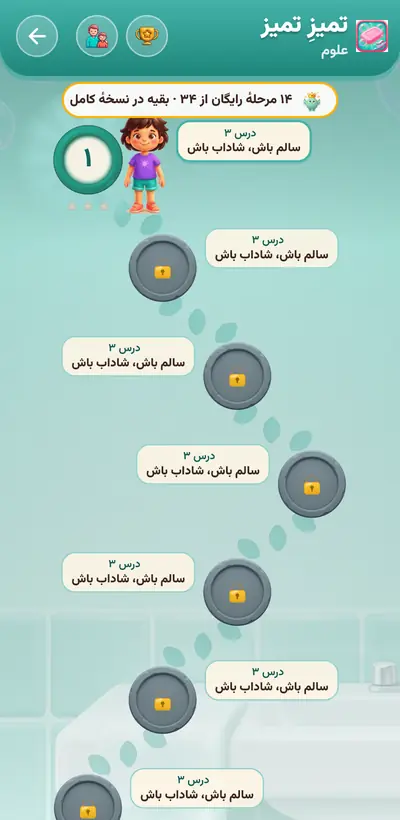
 Grade 134 levels
 Grade 234 levels
 Grade 334 levels
 Grade 434 levels
 Grade 534 levels
 Grade 634 levels