City & Village Basket — an educator's view
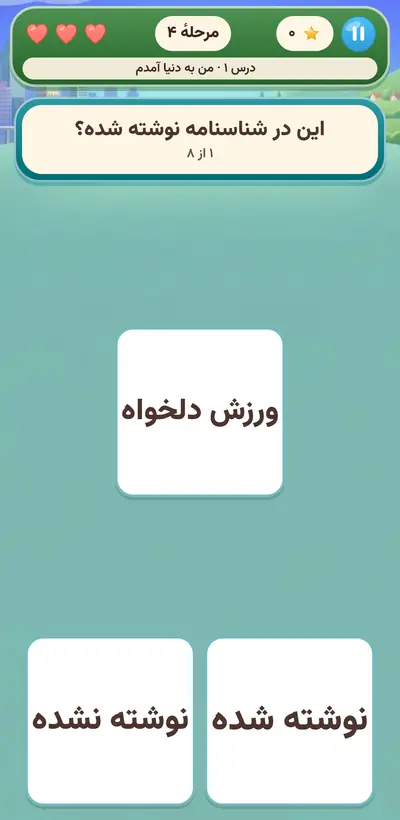
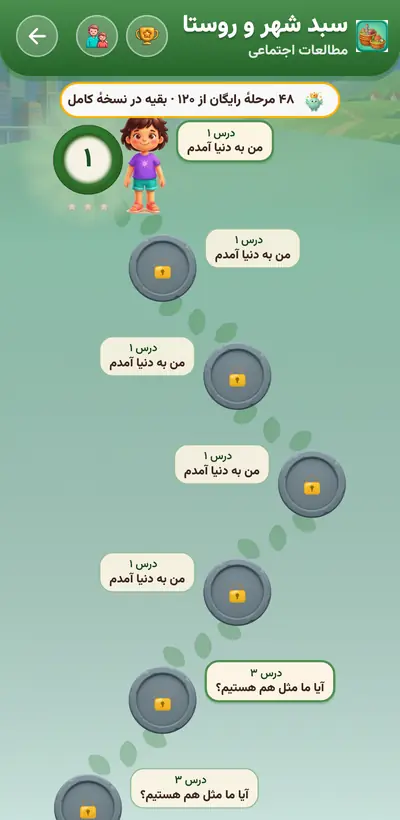
City & Village Basket practices sorting, the foundation for understanding many social studies concepts. The child tosses each card into one of the baskets: city or village, goods or services, need or want, public or private. Grade 4 brings renewable and non-renewable resources and the three sectors — agriculture, industry, and services; grade 5 brings income or expense, and Achaemenid or Sasanian; and grade 6 brings tangible and intangible heritage, and before or after Islam. The wrong basket flashes red for a moment and the card waits.
Drawing the line between concepts
Every sorting task forces the child to find a concept's key feature: what sets a service apart from a good? Developmental psychology calls this “concept formation”; it helps textbook definitions turn from memorized sentences into usable understanding.
Need or want?
Sorting need and want, income and expense, opens a conversation about money and choice. A child who can say a new toy is a want, not a need, has taken the first step toward self-control in shopping and patience for things that matter more.
Caring for what belongs to everyone
The public-or-private and public-property cards invite the child to see a park bench, a library book, and a street tree as things that belong to everyone. This awareness is the root of social responsibility: someone who knows something belongs to everyone takes care of it.
Seeing from more than one angle
The same subject is judged by different criteria across levels; water, once as a natural resource, and again as surface or underground. The child learns to look at something from several angles, and when the basket turns red and the card stays, to reconsider the criterion.
A tip for parentsWhile putting away the groceries, ask the child to sort the items into two groups: things we needed and things we just wanted. Then talk about the second group without judgment; the goal is understanding, not blame.
 Nikipoo School



 Grade 3120 levels
 Grade 4100 levels
 Grade 5135 levels
 Grade 6135 levels