Citizen Quiz — an educator's view
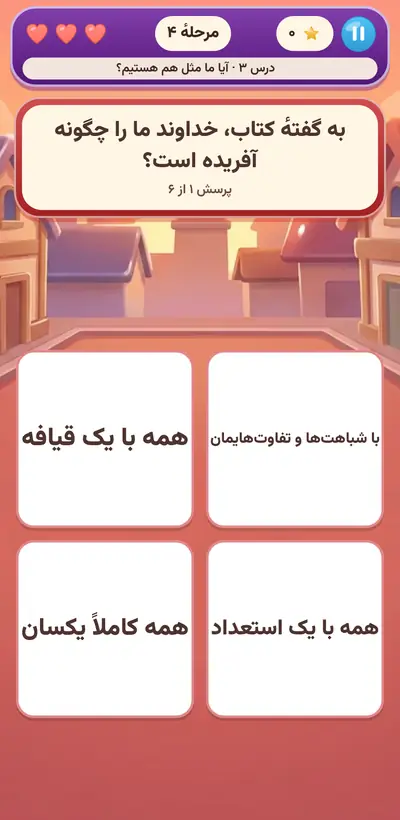
Citizen Quiz lays four-choice social studies questions in front of the child with no rush and no clock. Every question is a chance to think: school rules and traffic in grade 3; my rights and others' rights, and natural disasters in grade 4; law and mutual rights, income and saving in grade 5; and banking and insurance, exports and imports, and the Seljuks through the Qajars in grade 6. The child taps an answer, and if it's wrong, that choice turns off and they choose again.
Weighing fairness
Questions like “my rights, others' rights” and “mutual rights” put the child in situations where they have to see how their behavior affects others. This is exactly the “moral reasoning” that takes shape during the primary school years: moving from “what's good for me” to “what's fair for everyone.”
Ruling out a choice for a reason
When one choice turns off, the child rethinks with the three remaining ones and learns to set aside unrelated options instead of guessing. If it still doesn't work out, the correct answer glows on its own. This multiple-choice-exam strategy gets practiced here, again and again, without anxiety.
A pause before answering
The lack of a clock in this game is deliberate. A child who's used to answering in a hurry gets the chance here to read or listen to the whole question, weigh the choices, and then decide. This habit of pausing also helps them in class and in everyday decisions.
Law, everyone's guardian
Questions about law, safety, and traffic present law not as a list of “don'ts” but as a way of keeping everyone safe. A child who understands the reason behind a rule accepts it more easily and acts with more confidence at school and in the street.
A tip for parentsBring up one of today's questions at the dinner table and let everyone share their opinion — for instance, if someone cuts in line at the bakery, whose right has been violated? Hearing different viewpoints deepens the child's sense of fairness.
 Nikipoo School



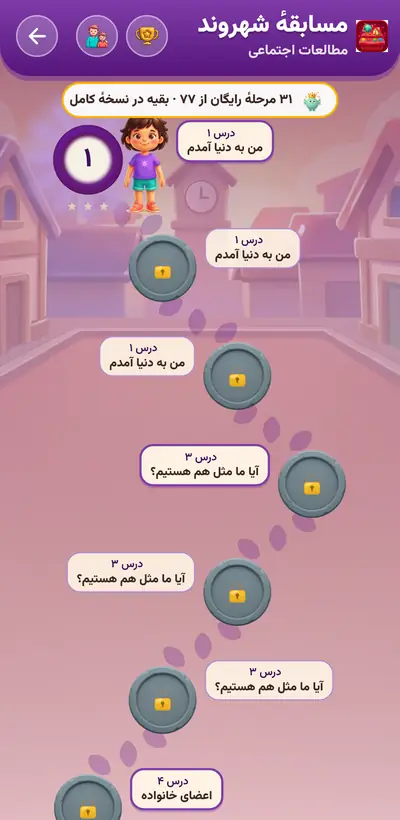
 Grade 377 levels
 Grade 471 levels
 Grade 587 levels
 Grade 694 levels