Daily 10: Society — an educator's view
Short, regular review is one of the most effective study habits. Daily 10: Society draws ten four-choice questions each day from the child's own grade's question bank, with a slightly different mix each time. In grade 3, family, school, safety, directions, and occupations come together; in grade 4, landforms and nomadic life; in grade 5, qanats, the Medes, and the Achaemenids; and in grade 6, continents, banking and trade, and Iran's world heritage. A gentle time bar runs alongside each question.
Active recall
In education, pulling knowledge out of memory is called “active recall”; it tends to hold onto that knowledge better than simply rereading. Here, instead of flipping through the book, the child has to recall the answer, and in just ten short questions that never wear them out.
Mixing subjects together
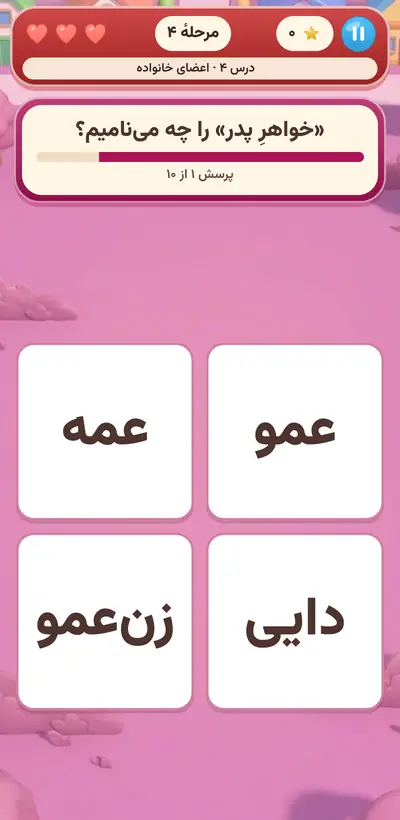
A question about weather sits next to one about citizens' rights. This mixing forces the child to figure out each time which lesson a question belongs to and which piece of knowledge to use; a skill that pays off in final exams, where chapters all come together.
Calm under gentle pressure
The time bar adds a bit of excitement, but running out has no unpleasant consequence: it just reveals the right answer and the next question comes. The child practices, in a low-stakes setting, not letting hurry get in the way of thinking; a small rehearsal for handling exam anxiety.
Building a daily routine
Since the questions are freshly arranged every day, this game suits a fixed few minutes in the day, say, after lunch. Short, predictable routines give a child a sense of control and quietly build self-discipline without argument.
A tip for parentsSometimes sit with the child and just watch today's ten questions. Afterward, ask them to explain one of the questions to you, like how a qanat brings water. Explaining to someone else makes the knowledge clearer for the child too.
 Nikipoo School



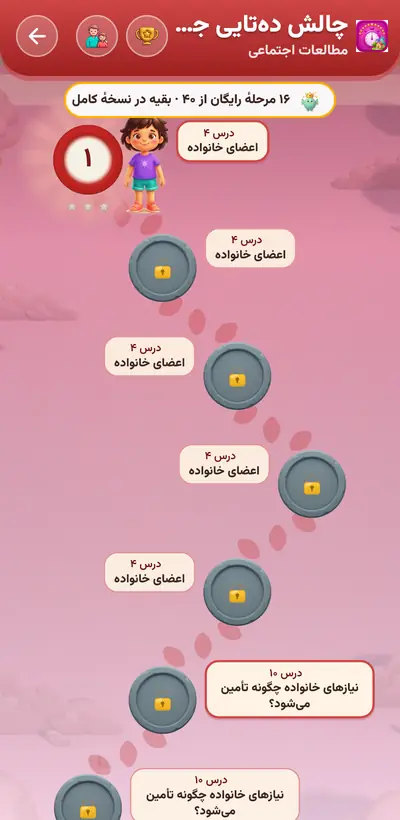
 Grade 340 levels
 Grade 440 levels
 Grade 540 levels
 Grade 640 levels