Nature Chain — an educator's view
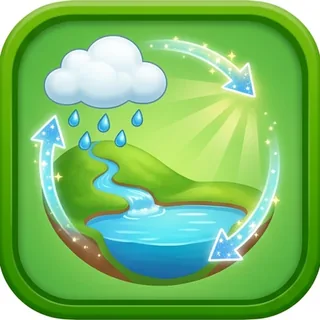
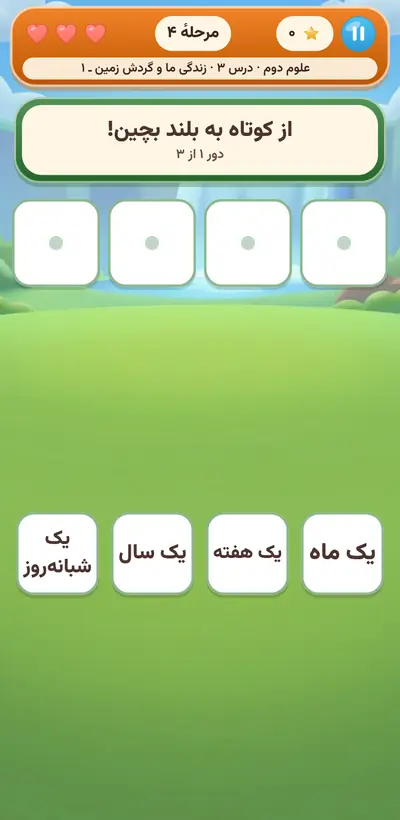
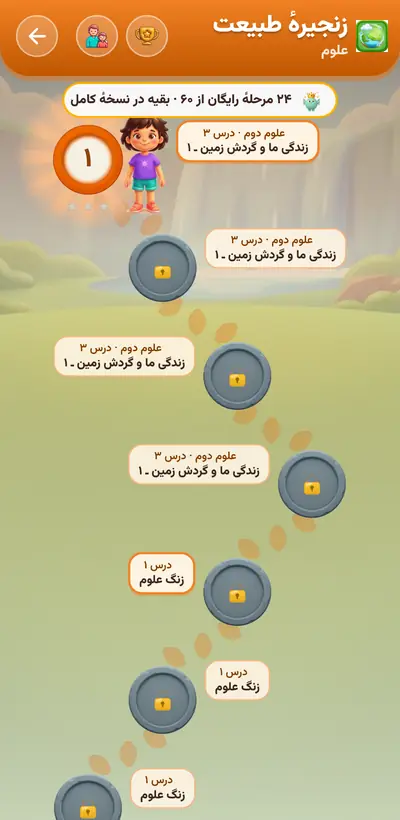
Many science concepts in grades 3 through 6 are “processes” — things that happen step by step. In Nature Chain, the child taps the cards in the right order to fill the top row: the stages of the water cycle, a plant growing from a seed, an animal's life cycle, the story of paper, the food chain, the path of food through the digestive system, the journey of energy, and getting ready for an earthquake. Only the next card is accepted and the rest just wiggle, so the child discovers the order by trying.
Seeing a phenomenon as a chain
The child learns that natural events don't happen all at once: water first evaporates, then forms a cloud, then falls as rain. Seeing a phenomenon as a chain helps them grasp the logic of how it happens, instead of memorizing a definition, and be able to explain it to someone else in their own words.
Each link, a condition for the next
In the food chain or the path of food through the body, each link depends on the one before it. When the child asks themselves “why is this one earlier?”, they're really examining cause and effect — a question that carries their understanding beyond memorization.
Breaking a big task into steps
Levels like “experiment and measure” and “get ready for an earthquake” show that order isn't only found in nature; our own tasks have a correct order too. This practice helps the child, in everyday life too, break a big task into small steps, one after another.
The courage to try
Because a misplaced card just wiggles and stays where it was, the child can guess freely, see the result, and think again. This freedom to try, especially for a cautious child afraid of choosing wrong, builds a safe space for boldness.
A tip for parentsPut a few bean seeds on damp cotton in a glass, and have the child draw a picture of it every two or three days. After two weeks, shuffle the drawings and ask them to arrange them in order of growth and explain each stage.
 Nikipoo School

 Grade 360 levels
 Grade 460 levels
 Grade 540 levels
 Grade 640 levels