Number Store — an educator's view
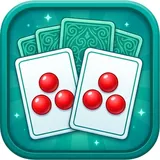
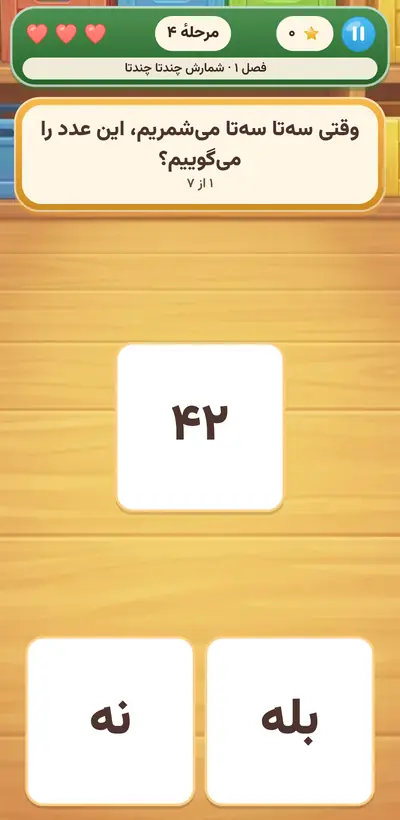
Sorting, before any definition, is how a child's mind builds a concept. In Number Store, the child tosses each card into its right basket: round or cornered, even or odd, smaller or greater than five thousand, true or false. The game's ladder climbs to harder concepts: multiples of three or five in grade 4, simple fractions and common factors in grade 5, and in grade 6, prime or composite, divisibility by three and nine, and multiplying and dividing by a number less than one.
Concepts through categories
For a child to say a number is even or prime, they need to recognize a category's shared feature and test it against a new example. This process is exactly how a concept forms. Every card is a small test of the definition the child has built in their mind.
Find the key clue
Levels like “look at the ones digit” and “only the ones digit matters” teach the child that to tell whether a five-digit number is even or odd, they only need to look at the last digit. Knowing which part matters and which can be ignored is an efficient problem-solving strategy.
Without doing the full calculation
In “judge the big product” or “multiplying by less than one,” the child has to judge whether a calculation is correct using estimation and logic, not by carrying it out in full — for example, realizing that multiplying by a number less than one makes the result smaller. This habit of smart double-checking also helps on exams.
Red basket, card still in hand
If a card lands in the wrong basket, the basket just flashes red for a moment and the card returns to its place. Nothing is lost and the game doesn't stop. The child gets a chance to reconsider their reasoning. This experience practices tolerating small setbacks and returning to the thought.
A tip for parentsWhile adding up groceries, ask the child to sort the prices into two groups: under fifty thousand tomans and over it, or even and odd numbers. For older grades, sort the page numbers of a book by divisibility by three.
 Nikipoo School


 Grade 1100 levels
 Grade 2135 levels
 Grade 3120 levels
 Grade 4120 levels
 Grade 5130 levels
 Grade 6100 levels