Math Bubbles — an educator's view
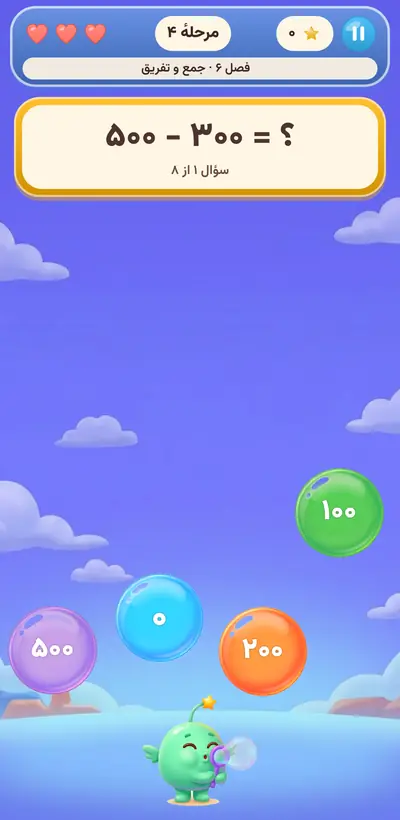
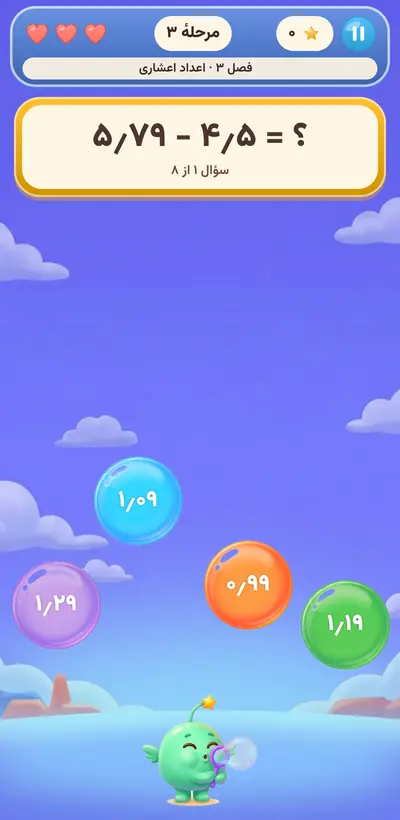
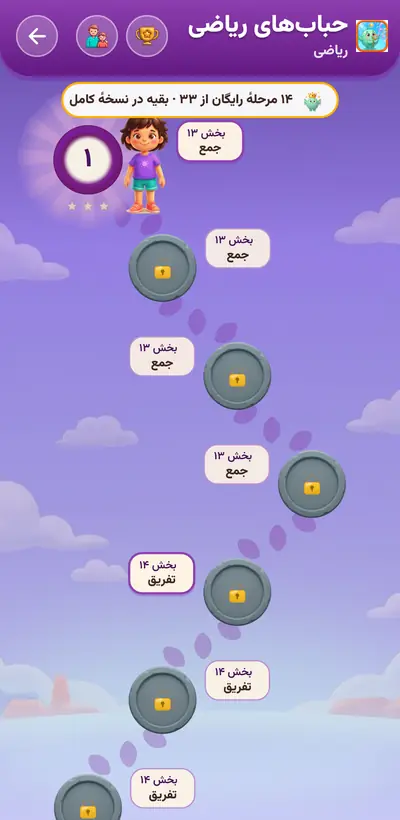
Mental math means the child can reach an answer without paper or fingers, and Math Bubbles asks for exactly that. The question sits at the top, and answer-bubbles rise from the bottom; the child must pop the right one before it reaches the top. The game's ladder climbs alongside the textbook: addition and subtraction up to ten and forward counting in grade 1, adding by tens and hundreds in grade 3, the six-to-nine times table in grade 4, and multiplying and dividing decimals by whole numbers in grade 6.
Holding the question in mind
The child has to keep the question in mind, work out the answer, and scan the bubbles at the same time. Psychologists call this short-term mental space "working memory" — where numbers are held and manipulated temporarily. This game exercises it steadily, in a manageable dose.
A shortcut through place value
In levels like "three-digit plus a hundred" or "adding thousands", counting one by one doesn't work. The child gradually learns to change only the hundreds or thousands digit and leave the rest alone. That's when place value turns from a textbook definition into a working tool.
Eye-hand coordination
The bubbles are moving, so the child has to see the answer, track its path, and tap it at the right moment. This coordination between seeing and acting, especially for grade 1 and 2 children, is good practice for fine motor skills and visual focus.
A chance that comes back
If the right bubble floats off the top of the screen, nothing is lost; the same question comes back with fresh bubbles. The child learns that missing a moment isn't the end of the story. That feeling helps them approach harder questions more calmly.
A tip for parentsAt the dinner table or while shopping, ask questions in this game's style, like "three hundred forty plus two hundred" or "seven times eight", and after the answer ask "how did you work it out?" Hearing the child's method, more than the answer itself, shows where they need help.
 Nikipoo School



 Grade 133 levels
 Grade 232 levels
 Grade 335 levels
 Grade 435 levels
 Grade 535 levels
 Grade 634 levels