Number Riddles — an educator's view
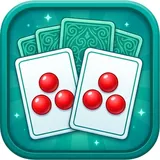
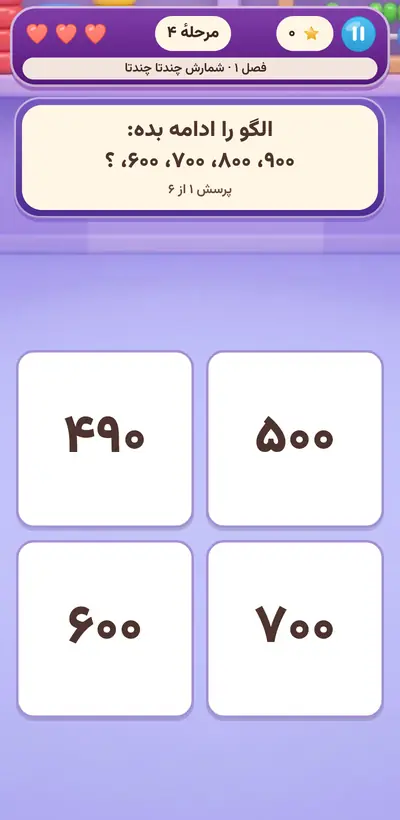
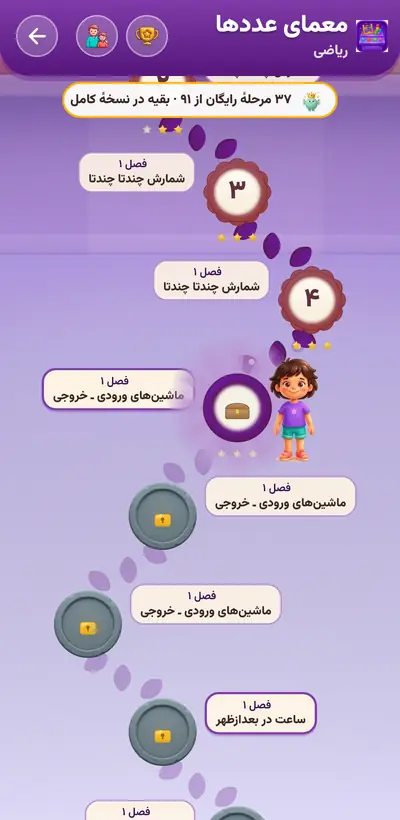
Elementary math isn't only the four basic operations, and Number Riddles shows the child this wider range. The questions have four choices and no clock behind them, so the child thinks for as long as they need. In grade 1 it's counting dots, continuing a pattern, and the corners and sides of shapes; in grade 2, place value, odd and even, and counting money; in grade 4, rounding and angles; in grade 5, the tenth number of a pattern; and in grade 6, factors, prime numbers, divisibility, estimating products, and centers of symmetry.
Thinking without rush
Some children freeze under time pressure, even when they know the answer. Here, there's no bar counting down. The child can reread the question, weigh each choice, and decide calmly. This space makes room for reflective thinking.
Even the turned-off choice teaches
If the child picks a wrong choice, only that choice turns off and they choose again. If they miss a second time too, the correct answer glows on its own so they can see it. Every choice, even a wrong one, gives new information and steers their thinking toward the answer.
Math, a web of ideas
Patterns, geometry, money, divisibility, and number stories sitting side by side show the child that math isn't just calculating. A child who's slow at multiplication might shine at patterns or shapes. Seeing this variety helps build a more positive picture of themselves as a math learner.
A feel for a reasonable answer
Questions like “estimate the product,” “the closest number,” and “compare and round” ask the child to gauge the range of an answer before computing exactly. This sense of scale helps the child spot an unreasonable answer on their own instead of just following a procedure.
A tip for parentsOnce a week, pose a number riddle from everyday life, like splitting fruit among guests, and then let the child make up a riddle for you. Building a question forces the child to see the concept from a teacher's point of view.
 Nikipoo School


 Grade 187 levels
 Grade 2104 levels
 Grade 391 levels
 Grade 490 levels
 Grade 5100 levels
 Grade 667 levels